Script the spot
Thirty seconds still starts on the page. Write the read and the beats in production format — the script stays the source all the way down.
Every frame of a commercial is deliberate — the product, the light, the read. MML ONE gives you the whole chain in one project graph: script, cast, board, product-in-scene frames, cut. Nothing drifts between the brief and the picture.
Five stages, each carried by a module you can open right now.
Thirty seconds still starts on the page. Write the read and the beats in production format — the script stays the source all the way down.
Lock your talent once — identity, wardrobe, expression — and keep the same face in every setup, from the opening frame to the product reveal.
A spot has no spare seconds. Board it panel by panel — the board syncs from the script, so a change to the read moves the picture with it.
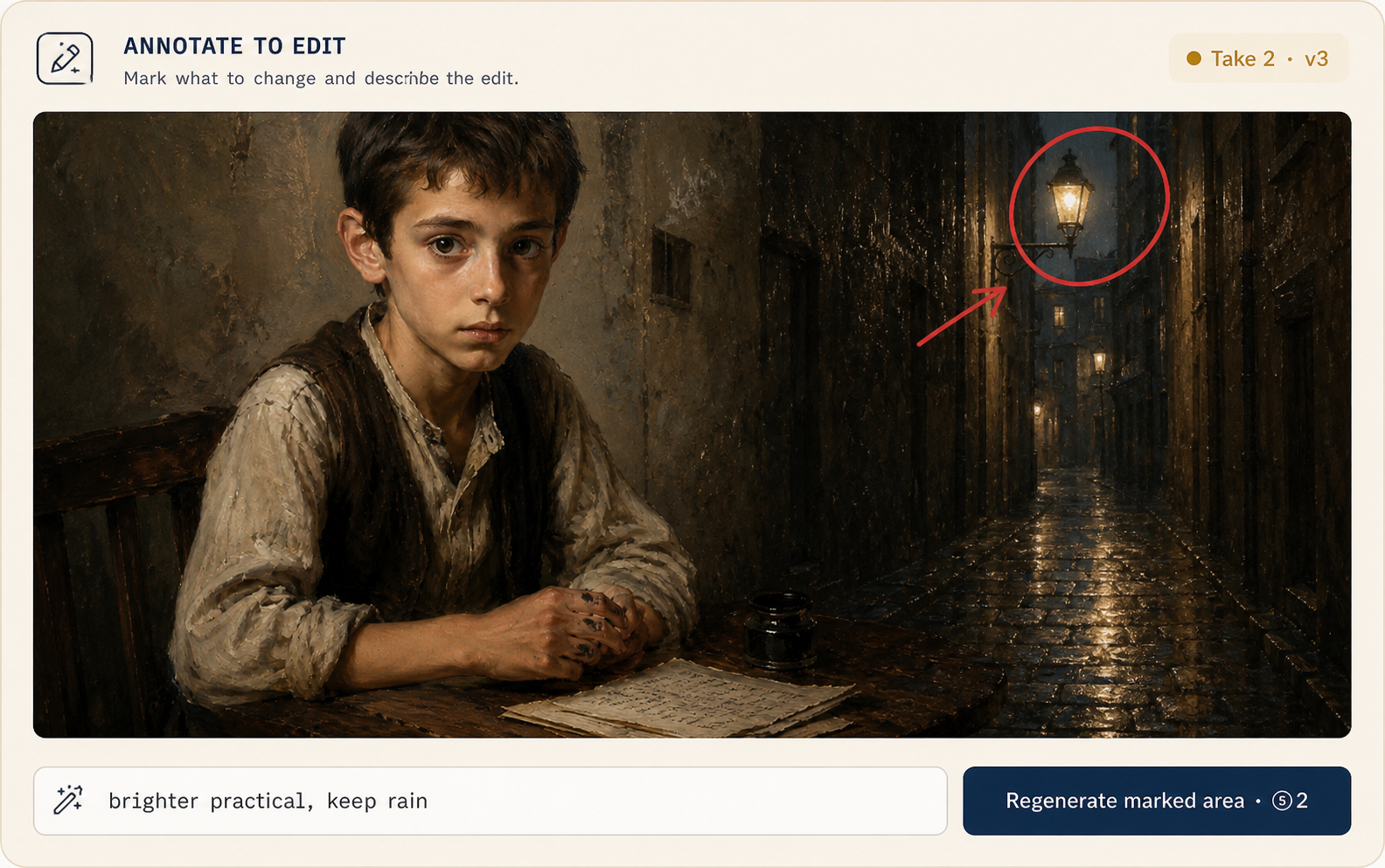
Bring product shots onto the generative canvas as references and place them in any scene. Variants fan out as nodes; every image keeps the prompt and references that made it.
Takes come back attached to their shots. Assemble the cut, swap a take without breaking the sequence, and deliver.
Advertising is revision. These are the things that survive round four of client notes.
Reference-driven frames keep the product recognizable shot after shot — the angle changes, the product doesn't.
Every take is a versioned asset with its history attached. The client wants option B from Tuesday? It's still there.
Fan out ten treatments of one setup on the canvas and pick with your eyes, not your imagination.
Script, board, frames and cut live in one project graph — a change upstream ripples downstream instead of getting lost in exports.
Start with a premise, a screenplay, or a folder of references. We'll set up your provider keys and walk through the first scene with you.
Cookie settings
We use analytics cookies to improve MML ONE. You can decline anytime. Privacy