Media-first nodes
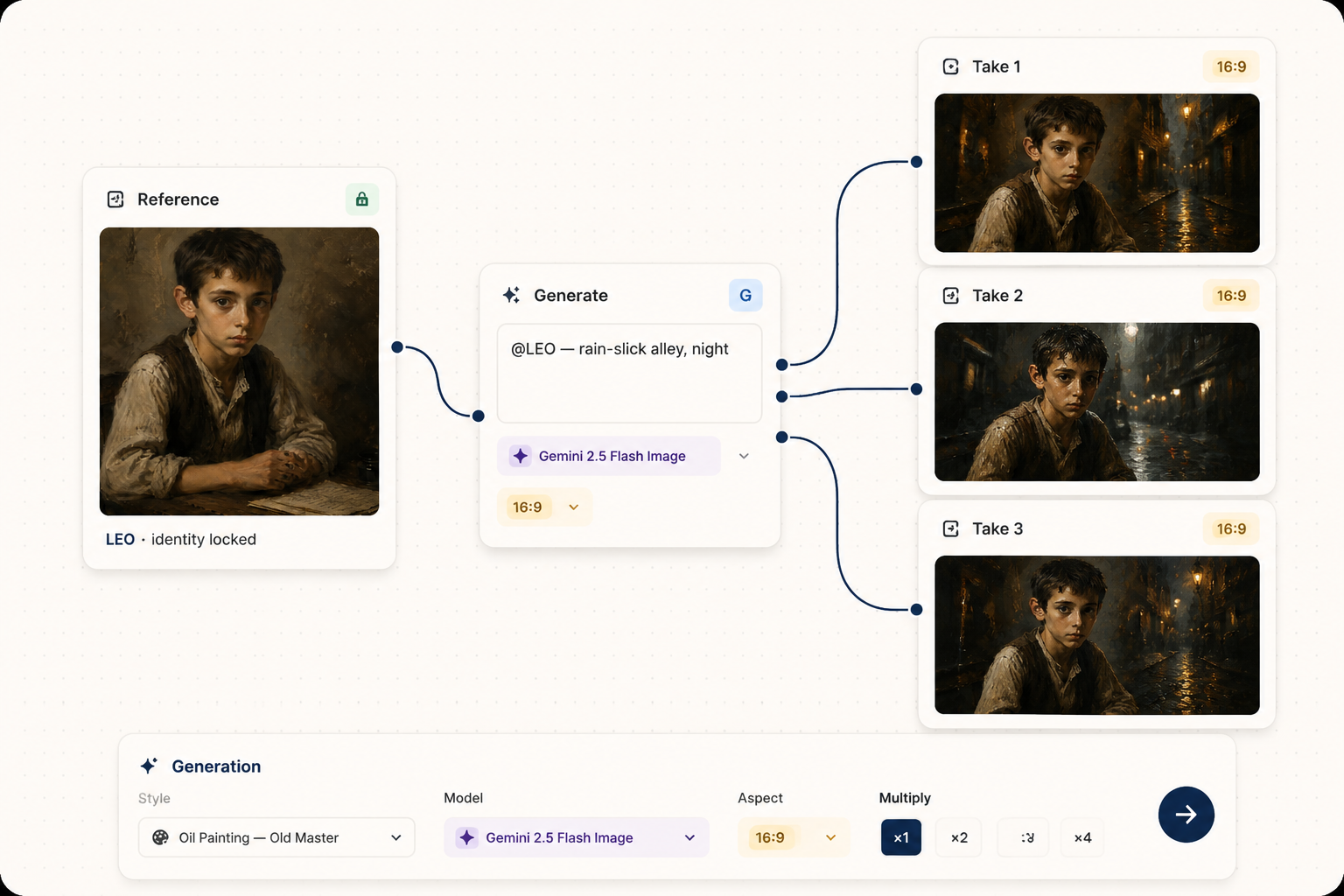
Drop in stills, takes, references — each becomes a node you can wire into any generator.
Chat threads lose context; the canvas keeps it. Every generation is a node with its references, prompt, model route and history attached — so iteration is spatial, comparable and reversible.
Upstream references travel with every generation downstream. Four moves cover most of visual iteration.
Drop in stills, takes, references — each becomes a node you can wire into any generator.
Fan a shot out to four variants in one run, compare on the board, keep the winner. Nothing overwrites; every branch stays addressable.
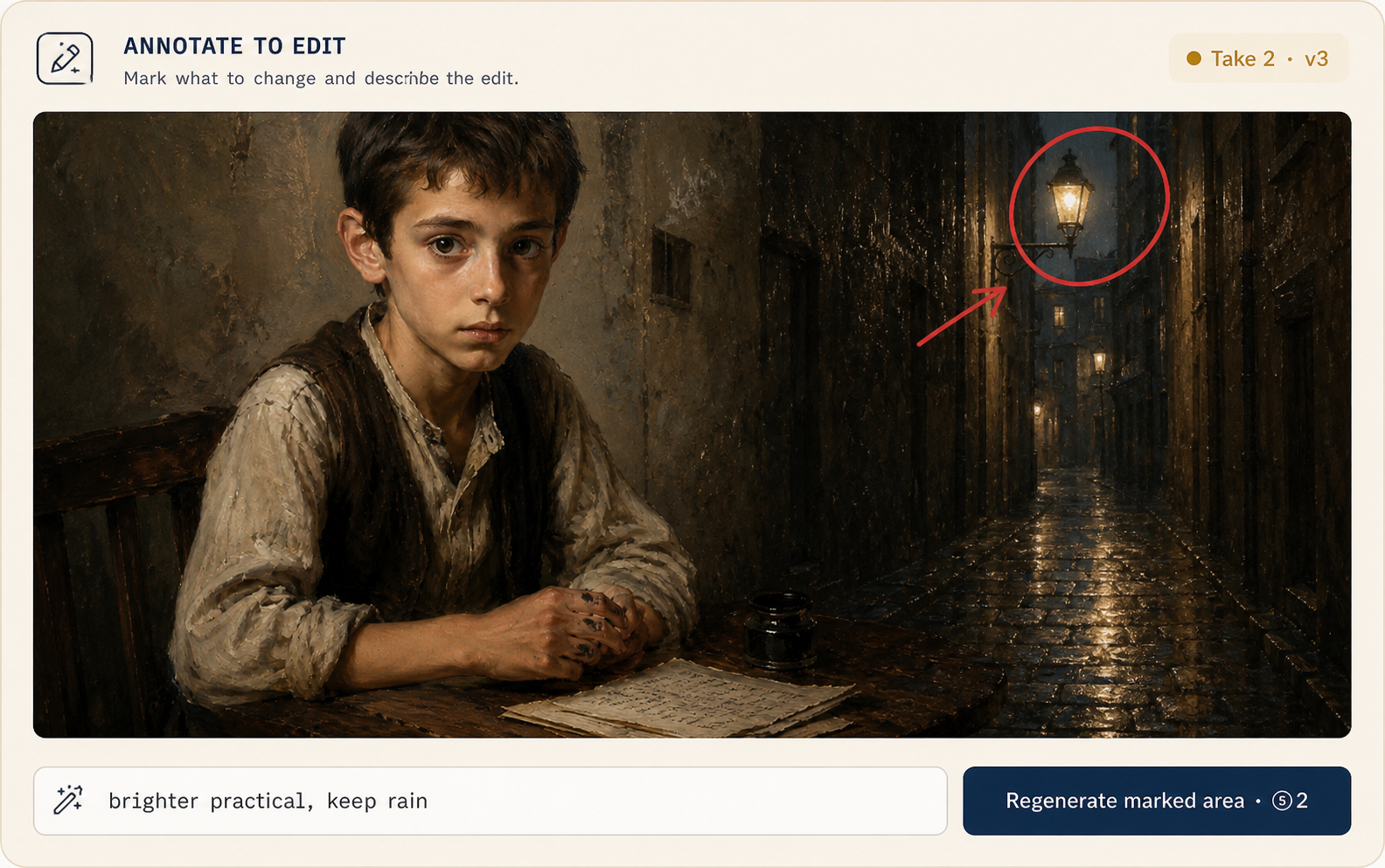
Circle the lamp, strike the extra chair — and regenerate only what you marked. Notes become edits without re-prompting the whole image.
Grab the last frame of a take and extend it into the next beat, or lift any frame into a new generator. Frame-accurate, not luck.
Bring plates, takes and references onto the board as nodes.
Fan out variants; every result lands next to its siblings, history attached.
Promote the winner — or hand the goal to the Canvas agent and approve its plan.
Start with a premise, a screenplay, or a folder of references. We'll set up your provider keys and walk through the first scene with you.
Cookie settings
We use analytics cookies to improve MML ONE. You can decline anytime. Privacy